
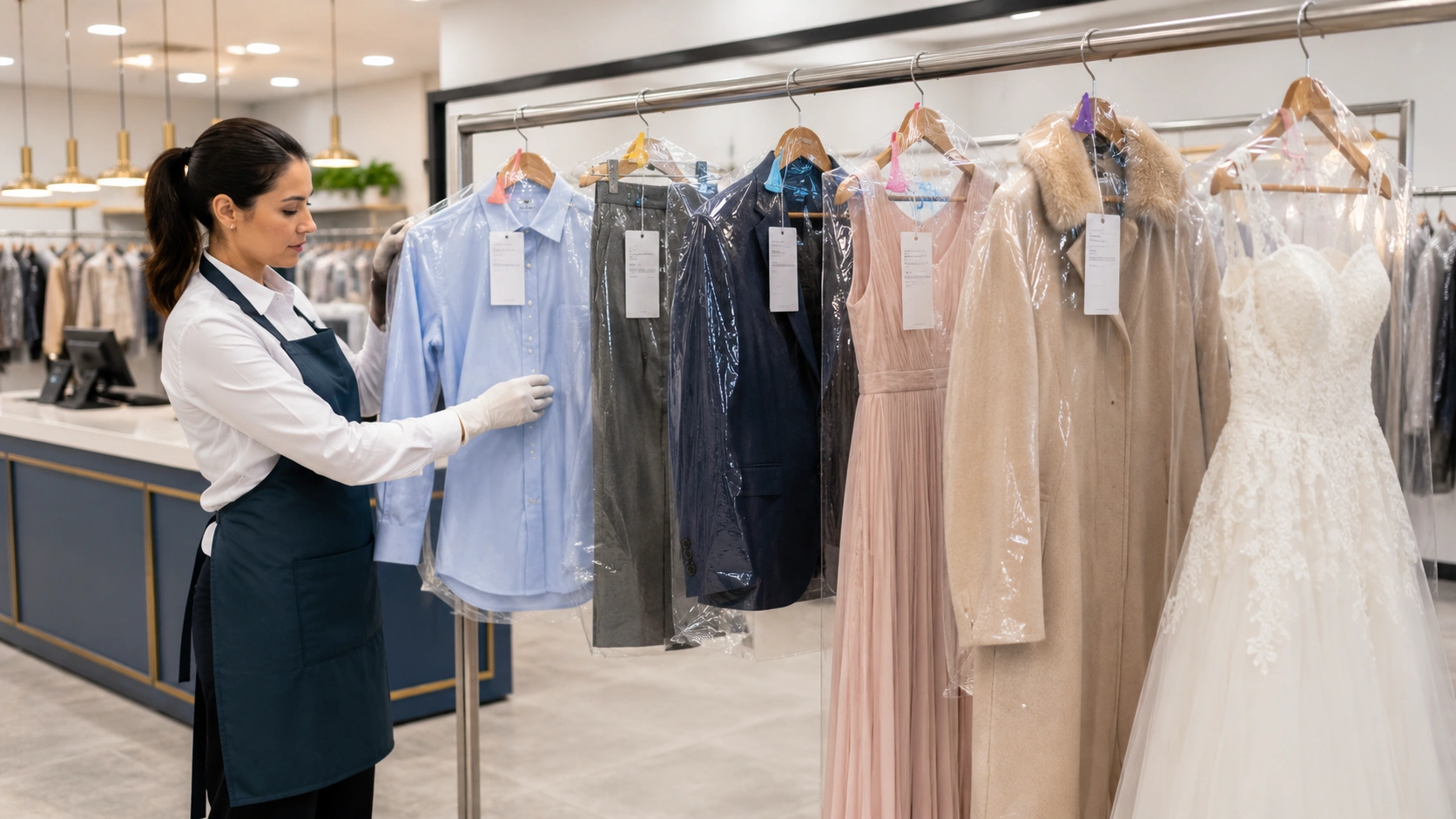

How long does dry cleaning take? In most cases, regular dry cleaning takes 24 to 48 hours, or about 1 to 2 business days, but the exact dry cleaning turnaround time depends on the garment type, fabric type, stains, dry cleaner workload, and whether you choose same-day dry cleaning or standard service.
A simple dress shirt or pair of trousers may be ready the same day or next day, while a full suit, formal dress, winter coat, leather jacket, suede item, comforter, or wedding dress can take longer. Some delicate or heavily stained garments may need 3 to 7 days, and specialty items like wedding gowns, leather, suede, and fur may take 1 to 2 weeks.
The good news is that your clothes are usually not “soaking” for days. Most of the waiting time comes from inspection, tagging, stain pre-treatment, cleaning, drying, pressing, quality control, and the cleaner’s order queue.
Quick Answer: How Long Does Dry Cleaning Usually Take?
For everyday clothing, the typical dry cleaning time is 24 to 48 hours. This applies to common items like shirts, pants, blouses, and simple dresses. Many professional dry cleaners can also offer same-day or next-day cleaning if you drop off early and the garment does not need special treatment.
Here is a quick overview:
| Clothing Item | Average Dry Cleaning Time |
| Dress shirts | Same day to 1–2 days |
| Shirts and pants | Around 24 hours to 1–2 days |
| Pants or trousers | 1–2 days |
| Blouses | 1–2 days |
| Business suit | 2–5 days |
| Suits and jackets | 24–48 hours to 2–5 days |
| Simple dress | 2–3 days |
| Formal dress or gown | 3–7 days |
| Winter coat | 3–7 days |
| Coats and outerwear | 2–4 days or longer |
| Comforter or duvet | 3–7 days |
| Bedding and bulky items | 2–4 days to 1 week |
| Leather or suede | 1–2 weeks |
| Wedding dress | 1–2 weeks or longer |
So, if you are asking how long does a dry cleaner take, the safest answer is: 1 to 2 days for regular clothes, 2 to 5 days for suits and dresses, and up to 1 to 2 weeks for delicate, bulky, or specialty garments.
Dry Cleaning Time By Garment Type
The biggest factor in dry cleaning turnaround time is the type of garment. A plain cotton shirt is much easier to clean, press, and package than a beaded evening gown or structured wool coat. That is why dry cleaners often give different timelines depending on the item.
Dress Shirts, Business Shirts, And Blouses
Most dress shirts and business shirts take same day to 1–2 days. In many cases, shirts are not technically dry cleaned. They may be laundered, pressed, starched, folded, or placed on hangers. This is why shirt laundry service is usually faster and cheaper than full dry cleaning.
A shirt may take longer if it has collar stains, sweat stains, ink stains, missing buttons, delicate fabric, or special care instructions. Shirt collars, cuffs, and collar stays also need proper finishing so the shirt looks crisp.
Pants And Trousers
Pants and trousers usually take 1 to 2 days. Simple polyester pants or casual trousers may be ready quickly, but wool, linen, silk, or heavily stained trousers can take longer. Pressing is important here because poor finishing can leave creases, wrinkles, or shine marks on the fabric.
How Long Does Dry Cleaning A Suit Take?
Many people ask, how long does dry cleaning a suit take? A standard business suit usually takes 2 to 5 days, although some dry cleaners can return a simple suit within 24 to 48 hours.
A suit takes longer than a shirt because it has more structure. The jacket may include shoulder padding, lining, buttons, lapels, delicate stitching, and shaped fabric that must be protected. A full suit also needs careful pressing, steaming, and quality control so the jacket and trousers keep their shape.
A wool suit may take 2 to 3 days, while silk suits, designer suits, custom suits, or formal tuxedos may take 3 to 5 days or longer. If there are stains, odors, loose buttons, or fabric damage, the dry cleaner may need extra time.
Dresses, Formalwear, And Evening Gowns
Simple dresses may take 2 to 3 days, but formal dresses often need 3 to 7 days. The reason is that dresses can include delicate fabrics such as silk, lace, velvet, chiffon, or rayon. They may also have beading, sequins, embroidery, lacework, multiple layers, or delicate linings.
A casual dress with no stains is usually straightforward. A cocktail dress, prom dress, evening gown, or formal gown needs more careful handling because one wrong cleaning method can cause fading, shrinkage, fabric distortion, or damage to embellishments.
Wedding Dresses And Wedding Gowns
Wedding dresses often take 1 to 2 weeks, and sometimes longer if preservation is included. A wedding gown is not just another dress. It may have lace, beads, fragile fabric, long trains, hidden stains, makeup marks, food stains, wine stains, or dirt around the hem.
Many dry cleaners also offer wedding dress preservation, which can include careful inspection, hand treatment, acid-free tissue paper, a preservation box, and long-term storage preparation. For expensive garments, it is smart to ask about photo documentation, delicate fabric consent, and the cleaner’s garment damage policy before leaving the dress.
Coats, Outerwear, Leather, Suede, And Bulky Items
Coats and outerwear usually take 3 to 7 days. Winter coats, overcoats, trench coats, heavy wool coats, and cashmere outerwear are bulky and often have linings, buttons, belts, or weather-related stains.
Leather and suede items can take 1 to 2 weeks because they require specialist care. Leather may need conditioning, while suede may need brushing and careful stain treatment. Fur garments, fur accessories, waterproof coats, and heavily layered outerwear also need extra time.
For coats, jackets, and outerwear, some cleaners may also offer water-repellent or stain-repellent treatment after cleaning. This can be useful for trench coats, winter coats, rainwear, and garments exposed to weather. However, it may add time and cost, so ask whether it is included or charged separately.
Comforters, duvets, blankets, and bedding usually take 3 to 7 days because they are large, bulky, and need enough drying and airing time before packaging.
Why Does Dry Cleaning Take So Long?
Dry cleaning does not usually take several days because the clothes are sitting in a machine the whole time. The actual cleaning cycle may be much shorter. The full process takes longer because your garment moves through several stages before it is ready for pickup.
First, the dry cleaner receives your clothes at drop-off and creates a garment ticket or claim tag. Then each item is inspected for stains, tears, loose buttons, missing items in pockets, care labels, fabric type, and special instructions. Clothes are often sorted by fabric, color, weight, and cleaning method.
After that, visible stains may be pre-treated. Stain removal is one of the biggest reasons dry cleaning can take longer. A light dust mark is simple, but oil stains, grease stains, wine stains, ink stains, blood stains, protein stains, and deep-set sweat stains may need multiple treatments.
In most cases, your clothes are not sitting in solvent for days. A dry cleaning facility works more like a small production line. After drop-off, garments are tagged, sorted by fabric, color, and weight, checked for items in pockets, inspected for stains, and then cleaned. After cleaning, they move to pressing, final inspection, lint rolling, packaging, and pickup preparation. This is why the total wait time can be 24 to 48 hours or longer, even if the actual cleaning cycle is much shorter.
Once cleaning is complete, garments still need drying, pressing, steaming, final inspection, and packaging. If the cleaner has many orders, holidays, local events, wedding season, or a rush of customers, your clothes may wait in the dry cleaning order queue before each stage.
Step-By-Step Dry Cleaning Process Timeline
Understanding the dry cleaning process makes the timeline much easier to understand. A good cleaner is not only washing your clothes. They are protecting the garment’s shape, color, texture, and structure.
Step 1: Drop-Off, Tagging, And Inspection
When you drop off clothing, the cleaner attaches a unique identifier, ticket, or claim tag. This helps keep your clothes connected to your order. The staff checks care labels, fabric care instructions, stains, damages, buttons, pockets, and special care needs.
This step may only take a few minutes at the counter, but the real inspection may happen later in the production area.
Step 2: Stain Pre-Treatment
Before cleaning, stains are checked and treated. Different stains need different solutions. Oil-based stains, ink stains, wine stains, collar stains, sweat stains, and food stains may need special spot treatment.
This is why you should always tell your dry cleaner what caused the stain if you know. A stain from cooking oil is different from a stain caused by wine, makeup, blood, or ink.
Step 3: Solvent Cleaning Or Wet Cleaning
Traditional dry cleaning uses a chemical solvent instead of water. Common solvent-related terms include perchloroethylene, also called perc or tetrachloroethylene, hydrocarbon solvents, silicone-based solvents, and environmentally friendly solvents.
Traditional dry cleaning often uses perchloroethylene because it can break down oils and grease without soaking fabric in water. Some modern cleaners use hydrocarbon solvents, silicone-based solvents, or other eco-friendly cleaning methods. If you prefer a greener option, ask whether the cleaner offers perc-free dry cleaning, professional wet cleaning, or environmentally friendly solvents.
Some garments may go through professional wet cleaning, which uses water and specialized detergents under controlled conditions. Wet cleaning is not the same as throwing the item into a regular washing machine.
Step 4: Drying, Pressing, And Steaming
After cleaning, garments go through drying and finishing. Pressing and steaming are very important because this is what gives clothes a clean, professional look. Suits, trousers, dress shirts, and formalwear need careful shaping.
A poorly pressed suit can lose its structure, and a poorly finished shirt can look wrinkled even after cleaning.
Step 5: Quality Control And Packaging
The final step is quality control. The cleaner checks whether stains remain, whether the garment is properly pressed, and whether it is ready for pickup or delivery. Clothes may be placed in plastic covers for transport, but long-term storage is better in breathable garment bags.
Factors That Affect Dry Cleaning Turnaround Time
Several factors can speed up or delay the timeline.
Garment Type And Fabric Type
A plain shirt is easier to clean than a structured suit or formal gown. Delicate fabrics such as silk, wool, velvet, lace, suede, and leather require more care. Heavy garments like coats, comforters, and duvets also take longer because of size and drying time.
Stain Type And Stain Removal
Stain removal can add extra time. Light stains may not delay the process much, but complex stains may require multiple attempts. Wine, grease, ink, oil, blood, makeup, and sweat stains can be difficult, especially if the stain has already dried.
As a simple guide, light stains such as dust or small food marks may still fit into a 1 to 2 day turnaround. Moderate stains like wine, grease, or ink may take 2 to 4 days because they need more careful pre-treatment. Heavy stains such as blood, oil, or deep-set marks may take 3 to 7 days, especially if the cleaner has to treat the stain more than once.
Cleaner Workload And Busy Seasons
Dry cleaners are often busier during holiday season, wedding season, prom season, business travel periods, and before major events. During peak season, normal 24 to 48 hour service may become 3 to 7 days.
Pickup, Delivery, And Cut-Off Times
If you use pickup and delivery, your timeline depends on the delivery route. A garment may be cleaned quickly but delivered the next day based on scheduling. Also, many cleaners have a same-day cut-off time. If you drop off after that time, your order may be processed the next business day.
Repairs And Special Handling
Loose buttons, small tears, missing hooks, broken zippers, or alteration requests can delay your order. Some cleaners also separate delicate garments for hand cleaning or special fabric handling.
Can Dry Cleaning Be Done The Same Day?
Yes, same-day dry cleaning is possible, but not for every garment. It usually works best for simple items like shirts, pants, blouses, and lightly worn clothing. To increase your chances, drop off early in the morning and ask about the cleaner’s same-day cut-off time.
Same-day service may not be suitable for wedding dresses, leather, suede, fur, heavily stained clothes, delicate gowns, or bulky bedding. These items need more careful treatment and should not be rushed.
Rush service may also come with an additional fee, extra charge, or premium price. Before paying for expedited service, ask whether the cleaner can truly complete the garment safely in that time. Faster is not always better if the clothing is expensive or delicate.
Are Home Dry Cleaning Kits Faster?
Home dry cleaning kits can be faster than professional dry cleaning for lightly worn everyday clothes. Many kits take around 30 minutes to an hour because they usually involve stain pre-treatment, a dryer-safe cleaning bag, a cleaning sheet, and a short tumble-drying cycle.
However, they are not a full replacement for professional dry cleaning. Delicate fabrics, formal suits, wedding dresses, leather, suede, heavy stains, and expensive garments should still be handled by a professional dry cleaner. Home kits may refresh odor or light wrinkles, but they usually cannot replace expert stain removal, structured pressing, or fabric-specific cleaning.
How To Get Your Dry Cleaning Back Faster
If you need your clothes quickly, good preparation helps. Drop off early, separate urgent garments, and clearly mention your deadline. If you need a suit for an interview, wedding, meeting, or travel, tell the dry cleaner at drop-off.
Point out stains instead of assuming the cleaner will notice them. Empty your pockets, remove accessories if needed, and keep your claim tag or cleaning ticket number. Ask for the estimated pickup date before leaving the shop.
It is also smart to avoid peak times. The day before a holiday, major event, wedding weekend, or business conference can be busy. If you use pickup and delivery, confirm whether the quoted timeline means “ready at the facility” or “delivered back to you.”
If you need dry cleaning for a wedding, interview, business trip, party, funeral, or formal event, do not wait until the last day. A safe rule is to allow at least one week for important garments, even if the cleaner normally offers 24 to 48 hour service. This gives extra time for stain treatment, repairs, pressing, pickup delays, or unexpected workload during holidays and wedding season.
How Much Does Dry Cleaning Cost?
Many people search for time and price together, so it is natural to ask how much does dry cleaning cost before choosing a service. Prices vary by city, garment type, fabric, stains, and rush options. A shirt is usually cheaper than a suit, and a suit is much cheaper than a wedding gown or leather coat.
Here is a simple cost-level guide:
| Item | Typical Cost Level | Why Price Varies |
| Shirt | Low | Laundry vs dry cleaning, pressing, starch |
| Pants | Low to medium | Fabric type, stains, finishing |
| Suit | Medium | Jacket structure, lining, pressing |
| Dress | Medium to high | Fabric, lining, beads, layers |
| Coat | Medium to high | Weight, lining, stains |
| Wedding dress | High | Preservation, lace, hand inspection |
| Leather/suede | High | Specialist cleaning required |
The final dry cleaning cost may increase if you need rush dry cleaning, pickup and delivery, stain removal, odor treatment, repairs, or special handling. Always ask for an itemized receipt and customer approval before extra charges are added.
Dry Cleaning Vs Laundry Vs Carpet Cleaning: Do They Take The Same Time?
Dry cleaning, laundry, and carpet cleaning are different services, so their timelines are different too. Clothing dry cleaning usually takes 24 to 48 hours because the garment goes through inspection, cleaning, drying, pressing, quality control, and packaging.
Laundry is often faster for basic shirts and washable clothes, especially if the service is simple wash-and-fold or shirt laundering. However, laundry may not be safe for dry-clean-only garments, wool suits, silk dresses, leather, suede, or structured formalwear.
Carpet cleaning is different because carpets are usually cleaned with moisture and then need physical drying time. If you are wondering how long does it take carpet to dry after cleaning or how long does it take carpets to dry after cleaning, the answer depends on airflow, humidity, carpet thickness, cleaning method, and room temperature. Carpet drying may take several hours, while dry-cleaned clothes may take a day or two because of the full service process, not just drying.
When Should You Dry Clean Instead Of Washing At Home?
Dry cleaning is best when the care label says dry clean only, or when the garment is expensive, delicate, structured, or easy to damage. Suits, coats, silk dresses, wool trousers, velvet garments, lace formalwear, leather, suede, and embellished clothing are safer with a professional cleaner.
Washing at home may cause shrinkage, fading, dye bleed, fabric distortion, or loss of shape. A suit jacket, for example, is not just fabric. It has lining, padding, stitching, and structure that can be damaged by water and agitation.
Dry cleaning can also help certain clothes last longer when used correctly. Because the process does not rely on normal water washing and heavy agitation, it can be gentler on structured suits, delicate dresses, wool, silk, and formalwear. This helps reduce common washing risks such as shrinking, fading, stretching, and fabric distortion.
You should also dry clean when a garment has oil-based stains, odors, or delicate details that need expert treatment. However, not everything needs dry cleaning. Many cotton shirts, casual pants, t-shirts, and washable fabrics can be laundered if the care label allows it.
What Items Should Not Be Dry Cleaned?
Dry cleaning is safe for many delicate garments, but not every item should go through the process. Fur garments, antique textiles, extremely fragile fabrics, and clothing with glued-on appliqués or decorations may need specialist care instead.
Fur can lose natural oils, fragile fibers can weaken, and glued elements may loosen during cleaning. If an item is vintage, sentimental, expensive, or unusually constructed, ask the cleaner whether it needs a textile specialist instead of standard dry cleaning.
Also, if a garment has unusual dyes, handmade decoration, old fabric, or weak stitching, it is better to ask for a risk assessment before cleaning. A reliable cleaner should explain the risk before accepting the item.
How To Choose A Reliable Dry Cleaner
Choosing the right dry cleaner matters, especially for expensive clothes. A reliable cleaner should give you a clear estimated pickup date, explain extra charges, and inspect garments before accepting them.
Before leaving valuable clothing, ask a few simple questions. Do they clean delicate fabrics in-house or send them out? Do they handle leather, suede, wedding dresses, or formalwear? What happens if a garment is lost or damaged? Do they provide an itemized receipt? Is rush service available, and what does it cost?
For expensive garments, take photos before drop-off. This is helpful for wedding dresses, designer suits, luxury coats, and delicate formalwear. A professional cleaner should also be honest if a stain may not come out completely or if a fabric carries risk.
A good dry cleaner is not always the cheapest one. Look for clear communication, careful inspection, fair pricing, and realistic timelines.
How To Store Clothes After Dry Cleaning
After dry cleaning, do not leave clothes in plastic covers for long-term storage. Plastic is useful for short transport, but it can trap moisture and cause musty odors, mold, mildew, or fabric issues over time.
For better storage, use breathable garment bags, padded hangers, and a cool, dark place away from direct sunlight. Heavy coats and suits should hang on strong hangers that support the shoulders. Delicate dresses and wedding gowns may need acid-free tissue paper or preservation packaging.
Avoid wire hangers for long-term storage because they can distort garment shape. For wool, cashmere, and winter clothing, cedar sachets or lavender sachets may help reduce odors and discourage moths.
Extra Dry Cleaning Tips Most People Miss
Dry cleaning time is not only about the cleaning machine. A professional dry cleaner usually follows a full workflow that includes tagging, inspection, sorting, stain pre-treatment, solvent cleaning, pressing, quality control, and packaging. This is why clothes may take 24 to 48 hours even when the actual cleaning cycle is much shorter.
For simple items like shirts and pants, turnaround may be around 24 hours if there are no major stains. Suits and jackets often take 24 to 48 hours or 2 to 5 days, depending on the fabric, structure, and pressing requirements. Coats and outerwear may take 2 to 4 days or longer, especially if they need waterproofing, oil treatment, or special handling. Wedding dresses, leather, suede, and heavily embellished garments can take several days to 1 to 2 weeks because they need specialist care.
Stains can also change the timeline. Light stains may fit into a normal 1 to 2 day turnaround. Moderate stains like wine, grease, or ink may need 2 to 4 days. Heavy stains such as oil, blood, or deep-set marks may take 3 to 7 days if multiple treatments are required.
If you need clothes for an important event, give yourself extra time. Even if your local cleaner offers same-day dry cleaning or 24-hour turnaround, it is safer to allow at least one week for suits, formal dresses, coats, wedding outfits, or garments with visible stains. This gives the cleaner enough time for proper stain treatment, repairs, pressing, and final inspection.
Home dry cleaning kits may refresh lightly worn everyday clothing in about 30 minutes to an hour, but they are not a full replacement for professional dry cleaning. Avoid using them for expensive suits, silk dresses, wedding gowns, leather, suede, fur, or heavily stained garments.
Some items may not be suitable for standard dry cleaning. Fur, antique textiles, fragile fabrics, and garments with glued-on embellishments may need specialist care. If a garment is expensive, sentimental, vintage, or unusual, ask the cleaner about the safest method before leaving it.
For best results, ask your dry cleaner these questions before drop-off: What is the estimated pickup date? Is rush service available? Are there extra stain removal fees? Do you use perc, hydrocarbon, silicone-based, or eco-friendly solvents? Do you offer water-repellent or stain-repellent treatment for coats? What is your policy for lost or damaged garments? These questions help you avoid delays, hidden costs, and garment-care mistakes.
Frequently Asked Questions
How Long Does A Dry Cleaner Take?
A dry cleaner usually takes 24 to 48 hours for regular garments. However, suits, dresses, coats, stains, leather, suede, and wedding dresses can take longer.
Is Dry Cleaning Done In One Day?
Yes, some dry cleaners offer same-day dry cleaning, especially for simple garments dropped off early. Rush service may cost extra and may not be available for delicate or heavily stained items.
Why Do Dry Cleaners Keep Clothes For Days?
Dry cleaners keep clothes for days because each item goes through inspection, tagging, stain treatment, cleaning, drying, pressing, quality control, and packaging. Workload and queue time also affect the final pickup date.
Does Stain Removal Affect Dry Cleaning Time?
Yes. Stain removal can add time, especially for grease, oil, wine, ink, blood, sweat, or deep-set stains. Some stains need multiple treatments before the garment can be finished.
How Long Does Dry Cleaning A Suit Take?
A suit usually takes 2 to 5 days. A simple business suit may be ready in 24 to 48 hours, but custom suits, designer suits, tuxedos, silk suits, or stained suits may take longer.
How Long Does A Dry Cleaner Keep Clothes?
Dry cleaner holding policies vary by business and location. Some cleaners may hold unclaimed garments for 30 to 90 days, while others may keep them longer. After that, unclaimed clothes may be donated, sold, or disposed of depending on the cleaner’s policy. Always keep your claim tag and ask your local cleaner about their pickup deadline.
How Long Does It Take Carpet To Dry After Cleaning?
Carpet drying time is different from garment dry cleaning. If you ask how long does it take carpet to dry after cleaning, the answer depends on humidity, airflow, carpet thickness, and cleaning method. Carpets may take several hours to dry, while dry-cleaned clothes usually take 1 to 2 days because of the full cleaning and finishing process.
Is Dry Cleaning Better Than Washing?
Dry cleaning is better for delicate, structured, or dry-clean-only clothes. Washing is better for everyday washable fabrics. Always check the care label before deciding.
Does Dry Cleaning Remove Odors?
Yes, dry cleaning can remove many odors, especially from sweat, smoke, food, and storage. Strong odors may need deodorizing treatment or extra cleaning.
Final Takeaway
Most regular dry cleaning takes 24 to 48 hours, but the real timeline depends on the garment. Shirts and pants may be ready the same day or next day, while suits usually take 2 to 5 days. Dresses, coats, and formalwear may take 3 to 7 days, and wedding dresses, leather, suede, and specialty items may need 1 to 2 weeks.
Before dropping off clothes, ask your dry cleaner for the exact pickup date, rush service options, stain treatment fees, and any extra charges. That way, you know not only how long dry cleaning takes, but also what affects the time, price, and final result.
Disclaimer
This article is for general informational purposes only. Dry cleaning times, costs, methods, and results may vary based on the garment, fabric, stains, location, and individual dry cleaner policies.